Constantan Vs Manganin for Shunt Resistor | Material Comparison Guide
Constantan vs Manganin for Shunt Resistors
Constantan vs Manganin is an important material consideration when selecting shunt resistors for precision current measurement. Both copper-based resistance alloys are widely used for current sensing, but they differ in TCR, thermal EMF, temperature stability, and long-term resistance performance.
Manganin is generally preferred for precision shunt resistors where low TCR, low thermal EMF, and long-term measurement stability are critical. Constantan can be a practical choice for general-purpose current sensing where extreme thermal stability is less demanding.
This guide compares Constantan vs Manganin for shunt resistors and explains how material selection affects measurement accuracy, thermal performance, and reliability in industrial power electronics, battery systems, energy measurement, and current-sensing applications.
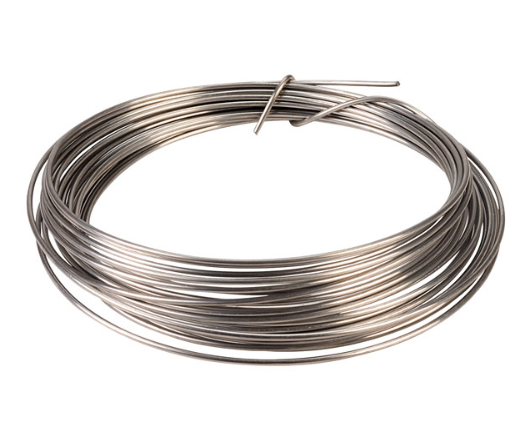
Advantages of Constantan Wire:
- Excellent resistance stability across temperature variations
- High conductivity and corrosion resistance
- Ideal for VFD drives, inverter applications, and battery systems
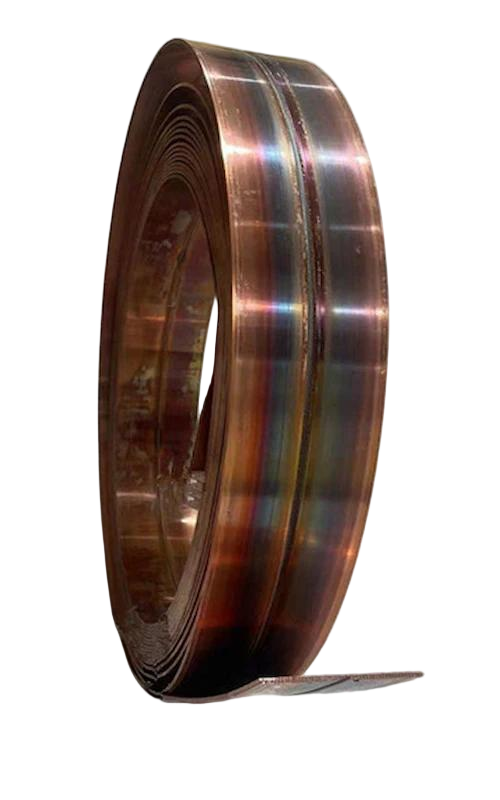
Advantages of Manganin Wire:
- Low thermal EMF for accurate readings
- Long-term stability under electrical stress
- Strong mechanical durability for harsh industrial environments
Which Is Better: Constantan or Manganin?
For precision shunt resistors, Manganin is generally preferred when low TCR, low thermal EMF, and long-term measurement stability are critical. Constantan can be a practical choice for general current sensing applications where extreme temperature stability is less important.
Constantan vs Manganin for Shunt Resistors
| Parameter | Constantan | Manganin |
|---|---|---|
| Alloy | Copper-Nickel | Copper-Manganese-Nickel |
| TCR | Low | Very low |
| Thermal EMF | Low | Very low |
| Temperature Stability | Good | Excellent |
| Long-Term Stability | Good | Excellent |
| Precision Current Sensing | Good | Excellent |
| Typical Use | General current sensing | Precision shunt measurement |
Why Manganin is Preferred for Precision Shunt Resistors
Manganin alloy is widely used in precision shunt resistors because of its:
- Low temperature coefficient of resistance (TCR)
- Low thermal EMF
- Excellent long-term stability
- Consistent resistance under continuous current load
This helps maintain accurate voltage drop measurement and reduce errors caused by temperature variation.
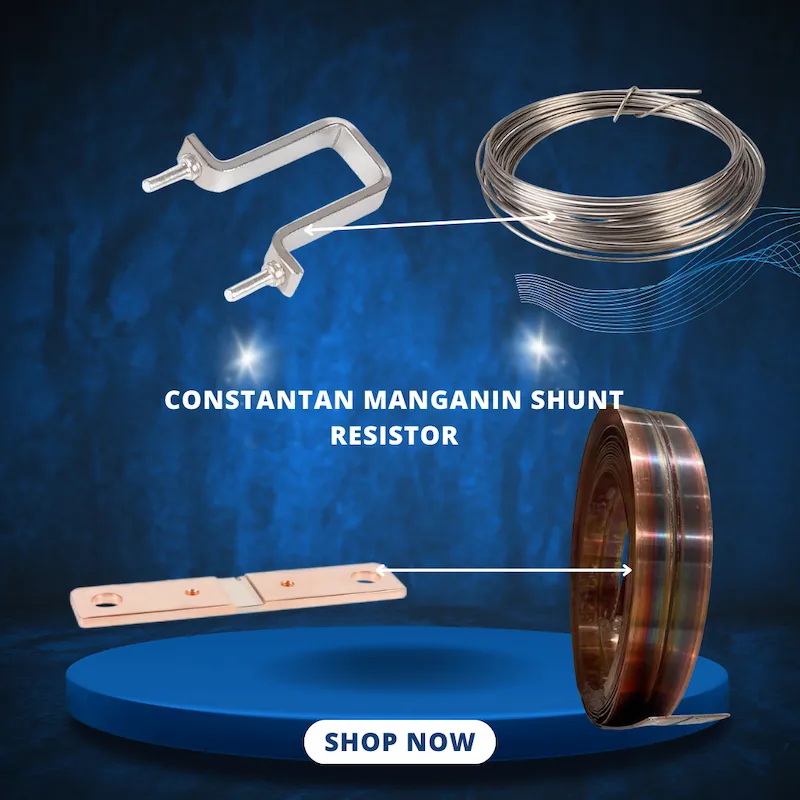
Applications of Constantan Manganin Shunt Resistors
Industrial & Power Electronics Applications:
- Current sensing in HVAC controllers, inverters, and motor drive systems
- Battery monitoring and energy storage systems (BESS)
- Industrial power supplies and energy management equipment
- Renewable energy systems, including solar and hybrid power inverters
- Industrial automation and control equipment
Engineers rely on Constantan Manganin shunt resistors to maintain consistent, reliable, and precise current measurements, preventing downtime and improving system efficiency.
Benefits of Constantan and Manganin Shunt Resistors
- Low TCR reduces measurement deviation caused by temperature changes
- Stable resistance ensures accurate current monitoring
- High mechanical strength supports harsh industrial environments
- Custom resistance values, current ratings, and dimensions available
How to Select Shunt Resistor Material
Selecting the right shunt resistor material depends on the required accuracy, thermal stability, current level, and operating environment.
- Measurement Accuracy: Choose a low-TCR alloy when precise current measurement is required.
- Temperature Stability: Consider TCR and thermal EMF to minimize measurement drift.
- Current Rating: Match the resistor construction to continuous current and overload conditions.
- Application Environment: Consider temperature, vibration, cooling, and long-term reliability.
- Precision Requirements: Manganin is generally preferred for precision shunt resistors, while Constantan can be suitable for general-purpose current sensing.
Related Products
Explore our current sensing resistor solutions for different power and measurement requirements:
- Metal Strip Shunt Resistor – High-precision current sensing solution for industrial and power electronics applications.
- Bolt-On DC Shunt Resistor – Designed for high-current DC measurement in battery systems and energy management equipment.
- SMD Current Sense Resistor – Compact PCB-mounted solution for space-sensitive electronic designs.
FAQ – Constantan Manganin Shunt Resistors
What is the difference between Constantan and Manganin shunt resistors?
Manganin generally provides lower TCR and thermal EMF than Constantan, making it better suited for precision shunt resistors.
Constantan can be suitable for general-purpose current sensing applications.
Why is Manganin commonly used in precision shunt resistors?
Manganin provides low thermal EMF, excellent temperature stability, and consistent resistance under continuous operation.
What applications use Constantan and Manganin shunt resistors?
They are widely used in industrial power systems, energy meters, battery monitoring, inverters, and precision current measurement equipment.
Can shunt resistor materials and specifications be customized?
Yes. Resistance values, current ratings, dimensions, and material configurations can be customized according to application requirements.
Conclusion
Constantan and Manganin shunt resistors provide stable and accurate current measurement solutions for industrial power electronics, battery systems, and energy management applications. By selecting the appropriate resistance alloy and design configuration, engineers can achieve better measurement accuracy, thermal stability, and long-term reliability in demanding electrical environments.