Why Some Ceramic Power Resistors Fail Before Reaching Their Rated Power: The Importance of Resistance Element Quality
Introduction
In power electronics applications, engineers often select resistors based on three basic parameters: resistance value, rated power, and physical size. However, the rated power marked on a resistor does not always represent its actual long-term performance in every operating condition.
For ceramic power resistors, especially high-resistance and high-power types, reliability depends not only on the wattage rating but also on the quality of the resistance element, internal construction, thermal design, and manufacturing consistency.
A resistor may appear normal externally while experiencing internal degradation that eventually causes resistance drift, performance instability, or even open-circuit failure.
Understanding the relationship between resistance element quality and real power capability is essential for designing reliable industrial and power electronic systems.
Rated Power Does Not Always Mean Continuous Operating Capability
The rated power of a resistor is usually measured under specific test conditions, including:
- Defined ambient temperature
- Specified mounting conditions
- Controlled heat dissipation environment
- Short-term or standard laboratory testing
However, real applications are often more demanding.
Power resistors used in:
- Motor drives
- Power supplies
- Industrial controllers
- Voltage reduction circuits
- Energy systems
may experience:
- Continuous operation
- High ambient temperature
- Limited airflow
- Thermal cycling
- Electrical stress
Therefore, the actual reliability of a resistor depends on how effectively it can manage heat and maintain stable electrical characteristics during operation.
Hidden Factors That Affect Ceramic Power Resistor Reliability
1. Resistance Element Uniformity and Heat Distribution
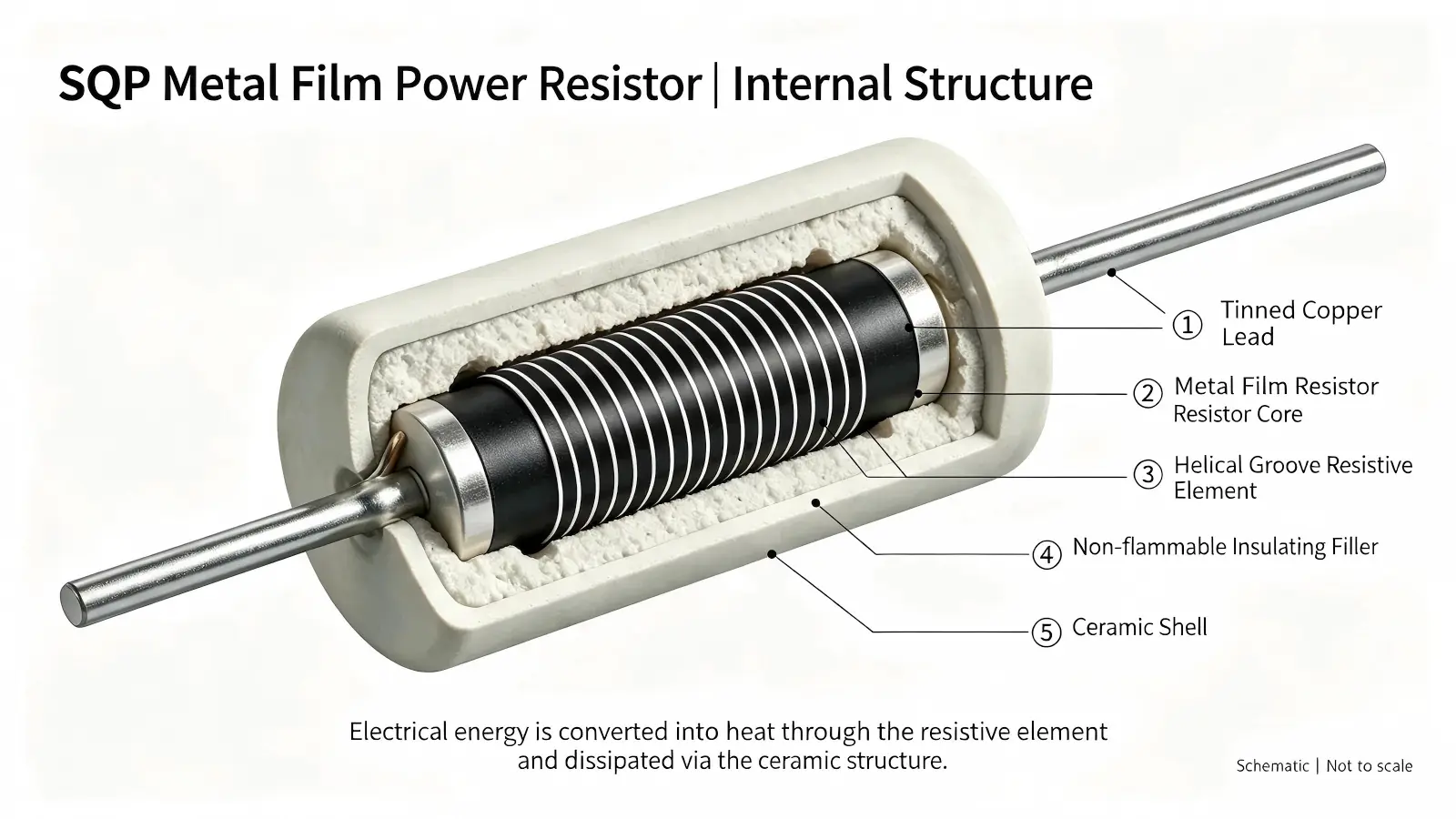
The resistance element is the core component that determines how electrical energy is converted into heat.
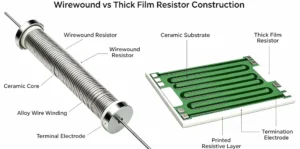
For metal oxide film or metal film ceramic resistors, the resistance value is typically adjusted through a spiral trimming process.
The trimming pattern directly affects:
- Current path distribution
- Local resistance density
- Heat generation area
- Long-term stability
If the resistance element has uneven film thickness or inconsistent trimming, localized high-temperature areas may develop during operation.
These hot spots can accelerate material degradation and reduce the actual power capability of the resistor.
A resistor may pass initial electrical testing but fail after extended operation due to internal thermal stress.
2. Spiral Trimming Quality in High Resistance Ceramic Resistors
High resistance ceramic resistors require precise control of the resistance path.
For example, a high-value resistor such as 2kΩ or higher needs a longer resistance path compared with low-resistance designs.
The spiral trimming process must maintain:
- Consistent groove depth
- Uniform spacing
- Stable resistance distribution
If the trimming process removes excessive material in certain areas, the remaining conductive path becomes weaker.
This can result in:
- Increased local current density
- Higher temperature concentration
- Reduced overload capability
Therefore, resistance adjustment is not only about achieving the correct ohmic value. The trimming process also influences the resistor’s power reliability.
3. Material Consistency of the Resistance Core
The ceramic resistance core requires consistent material characteristics to achieve stable performance.
Important factors include:
- Resistance film thickness
- Ceramic substrate quality
- Coating uniformity
- Temperature characteristics
Even when two resistors have identical specifications, differences in internal material quality may lead to different thermal performance.
A well-controlled resistance element provides:
- Stable resistance value
- Better temperature behavior
- More reliable power handling capability
Example: Why Some High Power Resistors May Fail Without Visible Damage
In practical applications, engineers may encounter a situation where a ceramic power resistor:
- Meets the specified resistance value
- Shows no obvious external burning
- Appears mechanically intact
- But causes an open circuit after operation
This type of failure is often related to internal damage rather than external overheating.
Possible causes include:
- Localized thermal stress inside the resistance element
- Weak points caused by uneven resistance distribution
- Insufficient power margin due to inconsistent construction
Because the damage occurs internally, visual inspection alone may not identify the problem.
Selecting Reliable Ceramic Power Resistors for Industrial Applications
When selecting an SQ ceramic power resistor, engineers should consider not only resistance and rated power but also the quality of the resistance element. engineers should consider more than resistance value and rated wattage.
Key evaluation factors include:
1. Resistance Stability
Ensure the resistor maintains stable resistance under continuous temperature changes and electrical loading.
2. Power Margin
Avoid operating a resistor continuously at its absolute maximum rating whenever possible.
A suitable safety margin improves long-term reliability.
3. Resistance Element Quality
The internal resistance structure directly affects:
- Heat distribution
- Overload capability
- Service life
4. Manufacturing Consistency
Reliable production requires:
- Incoming material inspection
- Resistance accuracy control
- Power capability verification
- Process quality management
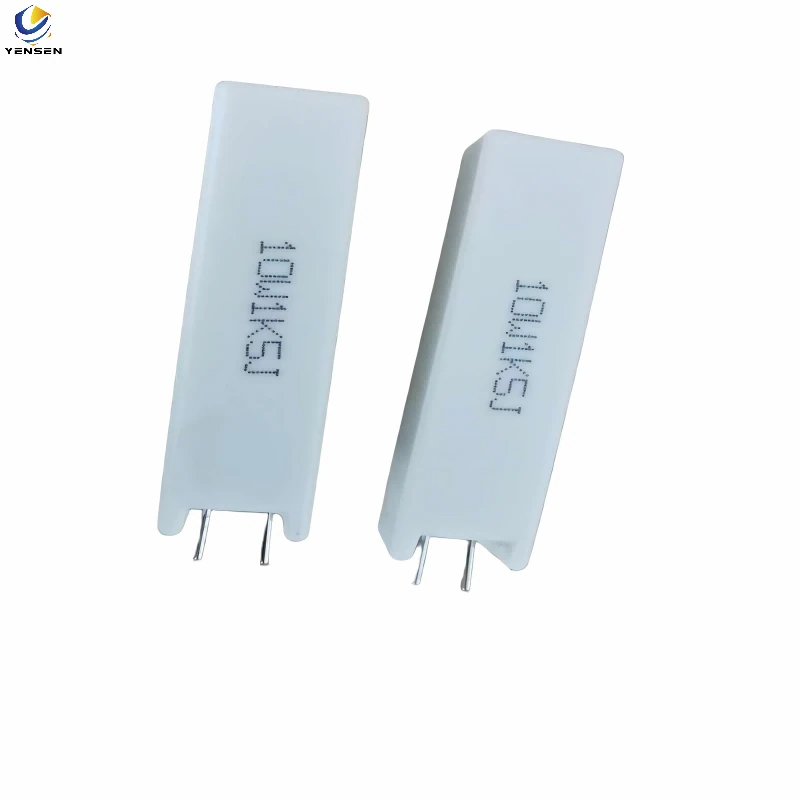
Ceramic Power Resistors in High Reliability Applications
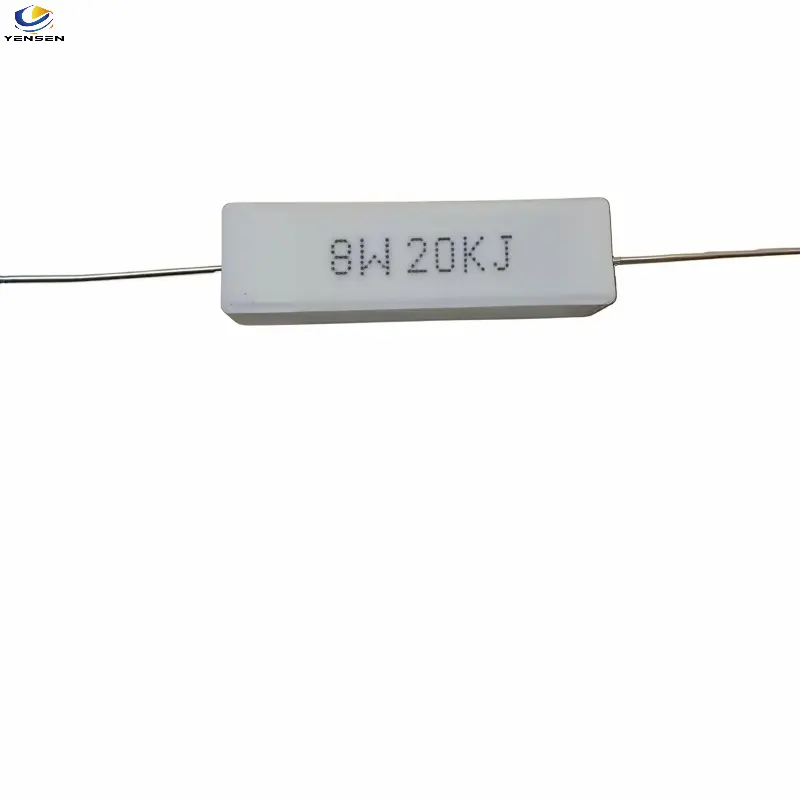
High-quality ceramic power resistors are widely used in:
- Motor drive systems
- Industrial automation equipment
- Power supply circuits
- Voltage reduction and current limiting applications
- Energy storage systems
- Control boards
- power resistor for motor drive applications
In these applications, resistor reliability directly affects overall system stability.
Choosing a resistor based only on nominal specifications may create unexpected risks during long-term operation.
Conclusion
The rated power of a ceramic power resistor is an important specification, but it is not the only factor determining real-world reliability.
Resistance element quality, trimming accuracy, material consistency, and thermal performance all influence whether a resistor can maintain stable operation under continuous electrical stress.
For high-power and high-resistance applications, selecting a resistor with reliable internal construction and consistent manufacturing control helps reduce unexpected failures and improves system lifetime.
For a specific project, share your part number or drawing, quantity, and key operating conditions. We can help review your requirements and coordinate with our manufacturing resources.Apply this to your component selection