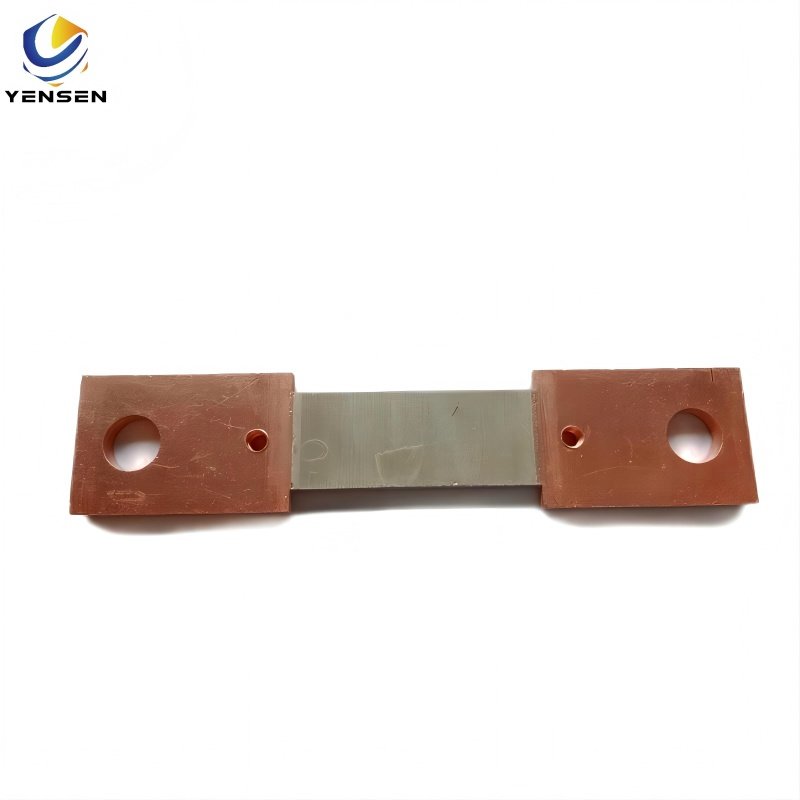
Why Does a Low TCR Shunt Resistor Matter for Precision Current Sensing?
Introduction
In precision current measurement systems, a low TCR shunt resistor is essential for maintaining measurement accuracy and long-term stability.
A shunt resistor with low Temperature Coefficient of Resistance (TCR) helps minimize resistance variation caused by temperature changes, ensuring reliable current sensing performance in applications such as battery management systems (BMS), energy meters, motor drives, industrial automation, and power electronics.
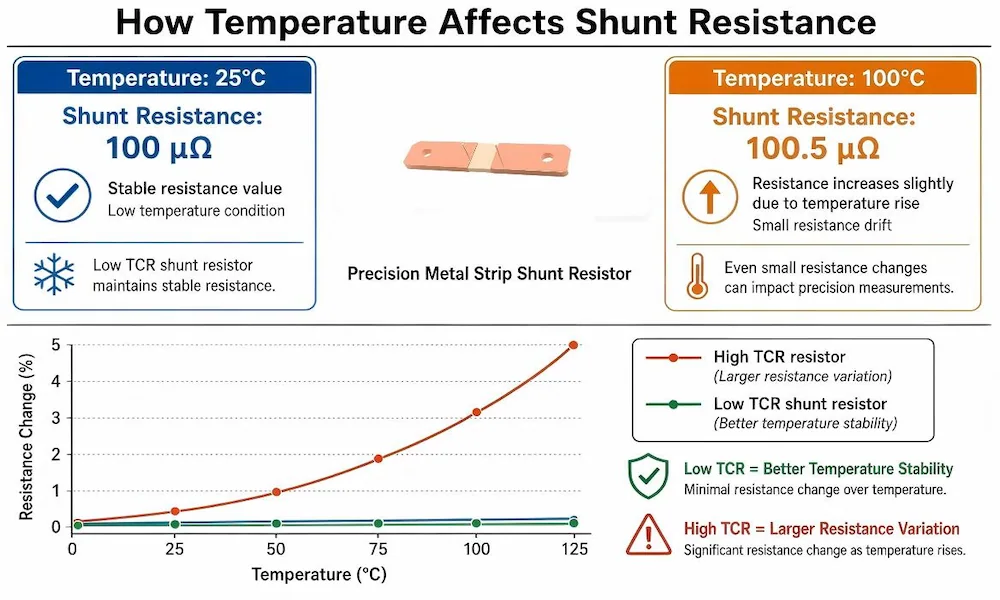
A shunt resistor works by creating a small voltage drop that allows a control system to calculate current flow. However, the resistance value can change when temperature increases during operation. Even a very small resistance variation may introduce measurement errors in high-current applications.
For applications such as battery management systems (BMS), energy meters, motor drives, industrial automation, and power electronics, selecting a low TCR shunt resistor helps ensure reliable current sensing performance under different operating conditions.
What Is TCR in a Shunt Resistor?
TCR stands for Temperature Coefficient of Resistance. It describes how much the resistance value changes when the temperature changes.
TCR is usually expressed in:
ppm/°C (parts per million per degree Celsius)
For example:
A shunt resistor with a TCR of 50 ppm/°C means its resistance changes approximately:
- 0.005% for every 1°C temperature variation.
Although this value appears very small, the effect becomes significant in precision current sensing applications where the voltage signal generated by the shunt resistor is only a few millivolts.
Why Is Low TCR Important for Shunt Resistors?
1. Maintain Accurate Current Measurement
The basic principle of a shunt resistor is based on Ohm’s Law:
V = I × R
Where:
- V = voltage drop across the shunt resistor
- I = current flowing through the resistor
- R = resistance value
The measured voltage is directly related to the resistance value.
If the resistance changes because of temperature rise, the voltage output also changes, causing inaccurate current calculations.
For example:
A 500A current sensing application uses a:
- Resistance value: 100μΩ
- Rated current: 500A
A small resistance drift caused by temperature can affect the measured voltage and reduce system accuracy.
A low TCR shunt resistor minimizes this resistance change and provides more stable current measurement.
2. Reduce Temperature-Induced Measurement Errors
During operation, shunt resistors generate heat because of power consumption:
P = I²R
In high-current applications, temperature rise can be significant.
Without low TCR characteristics, the resistance value may increase or decrease as temperature changes, resulting in:
- inaccurate current feedback
- incorrect power calculations
- unstable control performance
- reduced protection accuracy
Low TCR materials help maintain consistent electrical performance even under thermal stress.
What Materials Are Used for Low TCR Shunt Resistors?
Low TCR shunt resistors are usually made from precision resistance alloys designed for stable electrical characteristics.
Common materials include:
Manganin Alloy
Manganin is one of the most widely used materials for precision current shunt resistors.
Key advantages:
- Low temperature coefficient of resistance
- Excellent long-term stability
- Good thermal performance
- Suitable for high-current measurement
Manganin shunt resistors are commonly used in:
- energy meters
- battery monitoring systems
- DC power supplies
- industrial control equipment
Zeranin and Karma Alloys
Zeranin and Karma alloys are also used in precision resistor applications where stable resistance performance is required.
These materials provide:
- good temperature stability
- reliable resistance accuracy
- excellent performance in demanding environments
The selection of resistance alloy depends on application requirements such as accuracy, operating temperature, current level, and long-term stability.
Low TCR and Kelvin Connection: Why Both Matter
For high-precision current measurement, low TCR performance is often combined with Kelvin connection technology.
A traditional two-terminal connection measures not only the resistor resistance but also the resistance from solder joints, terminals, and copper connections.
In high-current applications, these additional resistances may introduce measurement errors.
A Kelvin shunt resistor uses separate:
- current terminals
- voltage sensing terminals
This four-wire measurement method minimizes the influence of contact resistance and improves measurement accuracy.
Therefore, precision current sensing designs often require both:
- low TCR resistance materials
- optimized Kelvin terminal structures
Low TCR Shunt Resistor Example
Consider a precision shunt resistor used for industrial current monitoring:
Specifications:
- Current rating: 400A
- Resistance: 75μΩ
- TCR: <50 ppm/°C
- Material: Manganin alloy
During operation, the resistor temperature may increase significantly due to current load.
A low TCR design helps ensure that the resistance remains stable, allowing the monitoring system to maintain accurate current feedback.
This is especially important in:
- battery systems
- motor controllers
- power converters
- industrial automation equipment
Applications Requiring Low TCR Shunt Resistors
Battery Management Systems (BMS)
Battery systems require accurate current measurement for:
- charge monitoring
- discharge control
- overcurrent protection
- battery state estimation
Low TCR shunt resistors improve measurement reliability throughout different temperature conditions.
Energy Metering
Smart meters and power monitoring equipment require long-term measurement stability.
A stable shunt resistance value helps maintain:
- measurement accuracy
- consistent calibration performance
- reliable energy monitoring
Motor Drives and Industrial Automation
Variable frequency drives (VFDs), servo systems, and industrial controllers use shunt resistors for:
- motor current feedback
- overload protection
- closed-loop control
Temperature stability is critical because current measurement directly affects system control performance.
Power Electronics
Power converters, UPS systems, and DC power equipment rely on accurate current sensing for:
- efficiency optimization
- protection functions
- power management
Low TCR shunt resistors help maintain stable operation under changing load conditions.
How to Select a Low TCR Shunt Resistor?
When selecting a precision shunt resistor, engineers should consider several factors:
Resistance Value
Common resistance values include:
- 50μΩ
- 75μΩ
- 100μΩ
- 250μΩ
- 500μΩ
- 1mΩ
Current Rating
The resistor must support both:
- continuous operating current
- short-term peak current
Thermal design and heat dissipation should also be considered.
TCR Specification
Typical precision requirements include:
- <100 ppm/°C
- <50 ppm/°C
- <25 ppm/°C
Lower TCR provides better resistance stability for precision measurement.
Mechanical Design
For high-current applications, mechanical factors are also important:
- terminal structure
- PCB mounting method
- heat dissipation
- vibration resistance
A properly designed shunt resistor improves system reliability in demanding industrial environments.
Conclusion
A low TCR shunt resistor is critical for accurate and stable current measurement. By reducing resistance variation caused by temperature changes, low TCR materials improve measurement precision and system reliability.
For applications including BMS, energy meters, motor drives, and industrial power electronics, selecting the right shunt resistor with stable TCR performance helps maintain consistent operation under changing thermal conditions.
OHM Resistor provides precision shunt resistor solutions for industrial and power electronics applications, supporting customized current sensing requirements through experienced resistor manufacturing partners.
Apply this to your component selection
For a specific project, share your part number or drawing, quantity, and key operating conditions. We can help review your requirements and coordinate with our manufacturing resources.