Description
Overiew
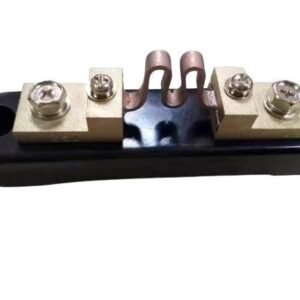
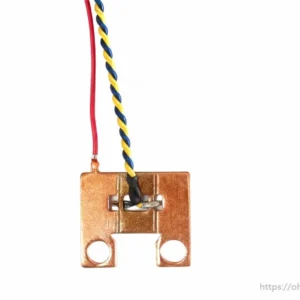
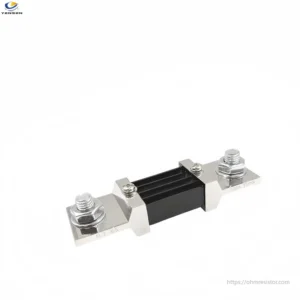
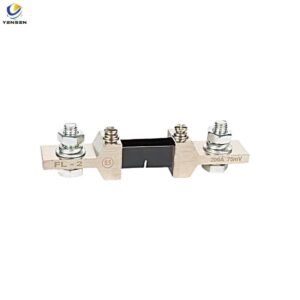
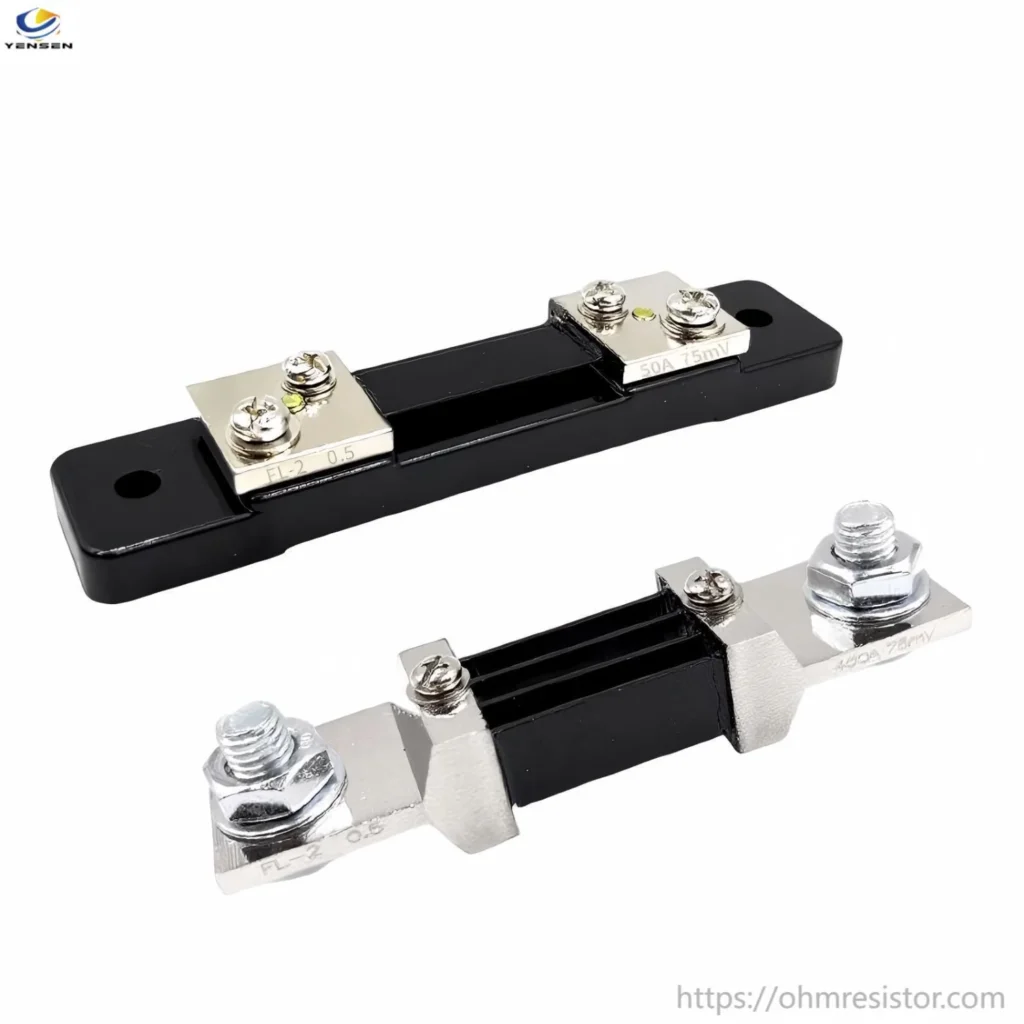
A DC ammeter shunt resistor is a precision current sensing component used to measure high DC currents by generating a small and stable voltage drop.This 75mV 50A fixed type shunt resistor is designed for DC ammeters, energy meters, power analyzers, battery monitoring systems, and industrial electrical equipment requiring accurate current measurement.By providing a calibrated voltage output proportional to current flow, the shunt enables reliable monitoring without introducing significant power loss into the circuit.
Operating Conditions
- Operating temperature: -40°C to +120°C
- Designed for continuous DC current measurement
- Suitable for industrial and energy systems
- Resistant to vibration and thermal stress
Key Features
-
High Accuracy (75mV output at 50A) – Suitable for precise current detection circuits.
-
Fixed Type Design – Compact, easy to mount in energy metering systems.
-
Pure Copper Busbar Construction – Ensures excellent conductivity and minimal heat rise.
-
Stable Voltage Drop – Provides reliable readings under continuous operation.
-
Custom Current Ratings – From 10A to 1000A, available upon request for industrial meters.
-
Low Resistance Value:Designed with precise low resistance elements for accurate current measurement.
Parameter Specification Remarks Rated Current 50A Customizable Rated Voltage Drop 75mV Standard for most meters Material Pure Copper + Manganin Alloy High stability Accuracy ±0.5% – ±0.25% Depending on range Mounting Type Fixed / Panel Mount For industrial setups Operating Temperature -40°C ~ +120°C Stable in harsh environments DC Ammeter Shunt Selection Guide
Rated Current Output Voltage Application 10A 75mV Small DC systems 50A 75mV Energy meters 100A 75mV Power monitoring 500A 75mV Battery systems 1000A 75mV Industrial power systems -
How Does a DC Ammeter Shunt Work?
A DC ammeter shunt works by creating a small voltage drop when current passes through its low resistance element.
For example, a 75mV 50A shunt produces a 75 millivolt signal at the rated current of 50 amps. The connected ammeter or monitoring circuit uses this voltage signal to calculate the actual current value.
This measurement method is widely used in DC power systems because it provides stable, accurate and cost-effective current sensing.
DC ammeter shunt of Wiring diagram analysis
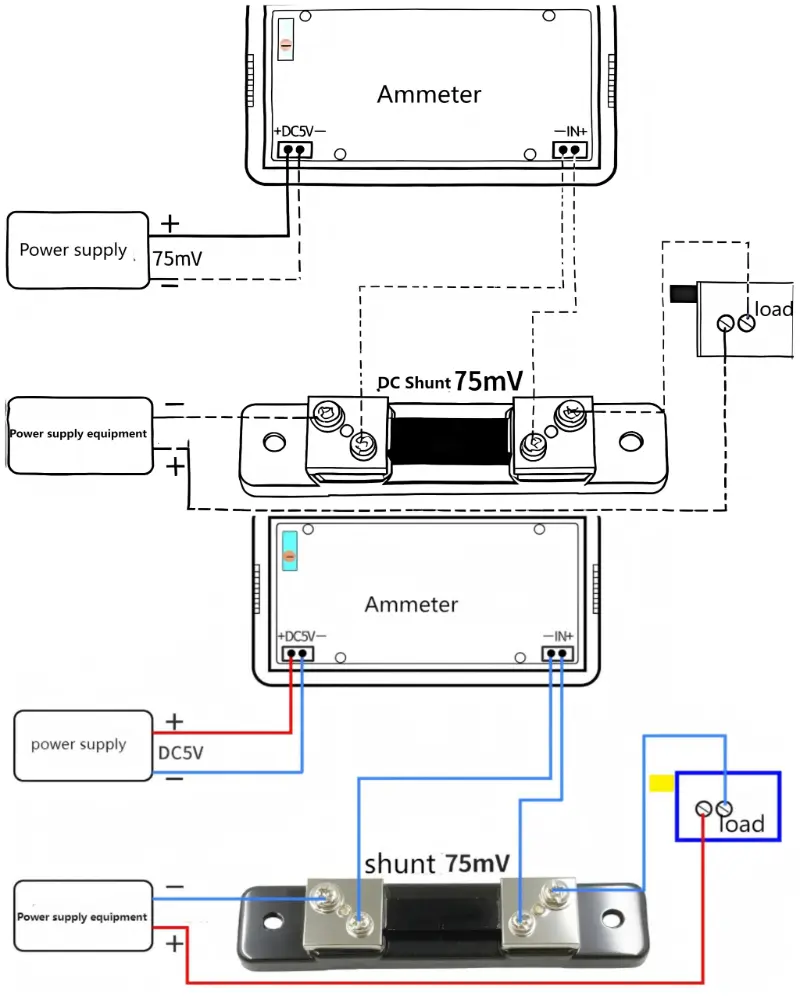
- If you need higher-current versions, check our high-current bolt-on shunt resistors here:
https://ohmresistor.com/product/high-current-shunt-resistor/To understand how shunts convert current into voltage, -
Precautions
Do not touch the primary circuit conductors or the connection points of the shunt while in operation to avoid electric shock.
Do not draw any signal or take samples from the secondary circuit.
This shunt is designed for DC measurement circuits with a rated insulation barrier voltage of 275 V.
When used together with a 75 mV current-limited moving-coil (magnetoelectric) ammeter, it effectively extends the ammeter’s current measurement range.
-
Common Problems in Current Measurement
- Inaccurate current readings in high load systems
- Overheating in low-quality shunt resistors
- Resistance drift affecting measurement accuracy
- Limited durability in industrial environments
How This DC Shunt Resistor Solves Them
- High precision resistance for accurate measurement
- Excellent thermal stability under continuous current
- Low temperature drift for consistent readings
- Durable construction for industrial use
Applications of DC Ammeter Shunt Resistors
– DC energy meters
– Battery management systems (BMS)
– Battery chargers
– Solar power systems
– DC power supplies
– Industrial control panels
– Power analyzers
– Electrical testing equipment
FAQ
What is a DC ammeter shunt resistor?
A DC ammeter shunt resistor is a low resistance component used to measure current by producing a proportional voltage drop.
Why are 75mV shunts commonly used?
75mV is a common standard output voltage because it provides a good balance between measurement accuracy and power loss.
How do I select a DC shunt resistor?
Selection depends on rated current, voltage output, accuracy requirements, thermal conditions and installation space.
Can DC ammeter shunts be customized?
Yes. Current rating, resistance value, dimensions and terminal structure can be customized.
Need a Custom Shunt Resistor?
- Custom current range available
- Fast sample support
- Engineering assistance for your system design