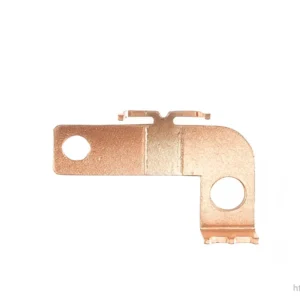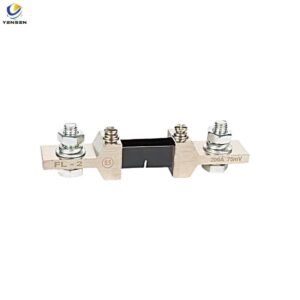
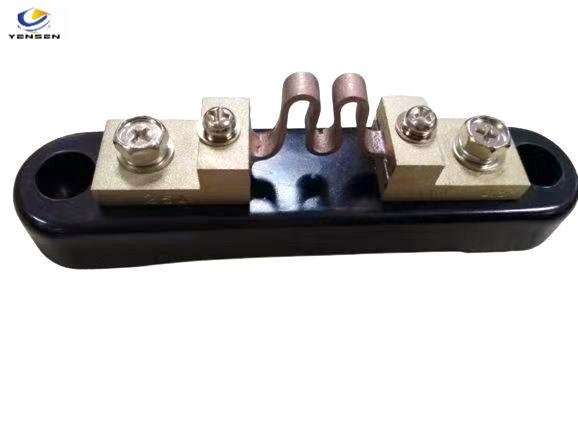
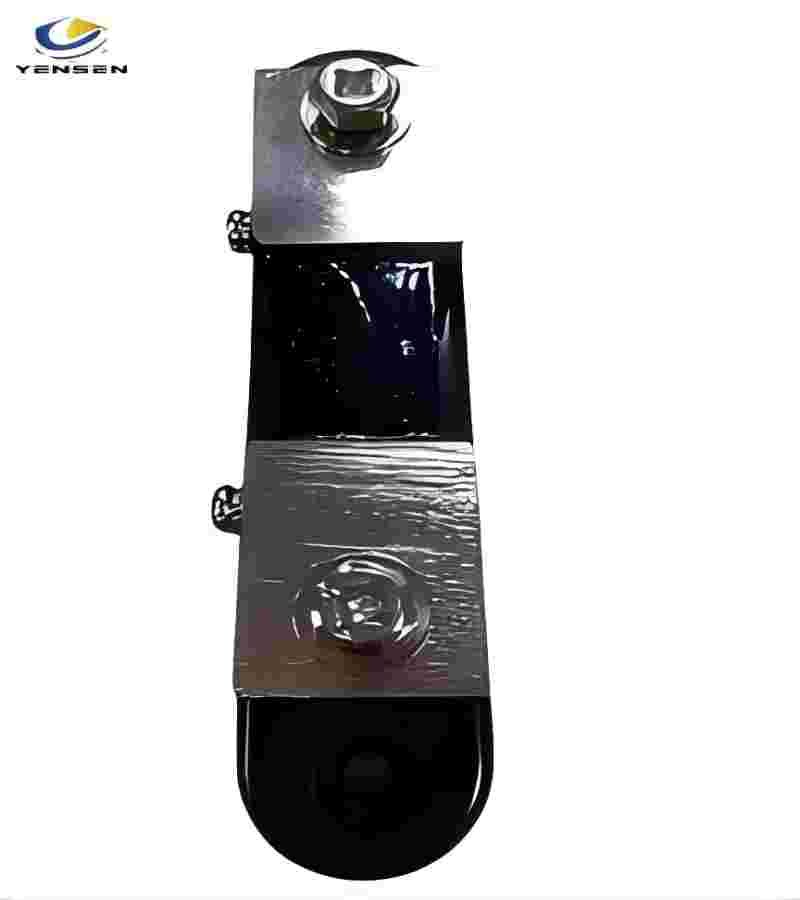
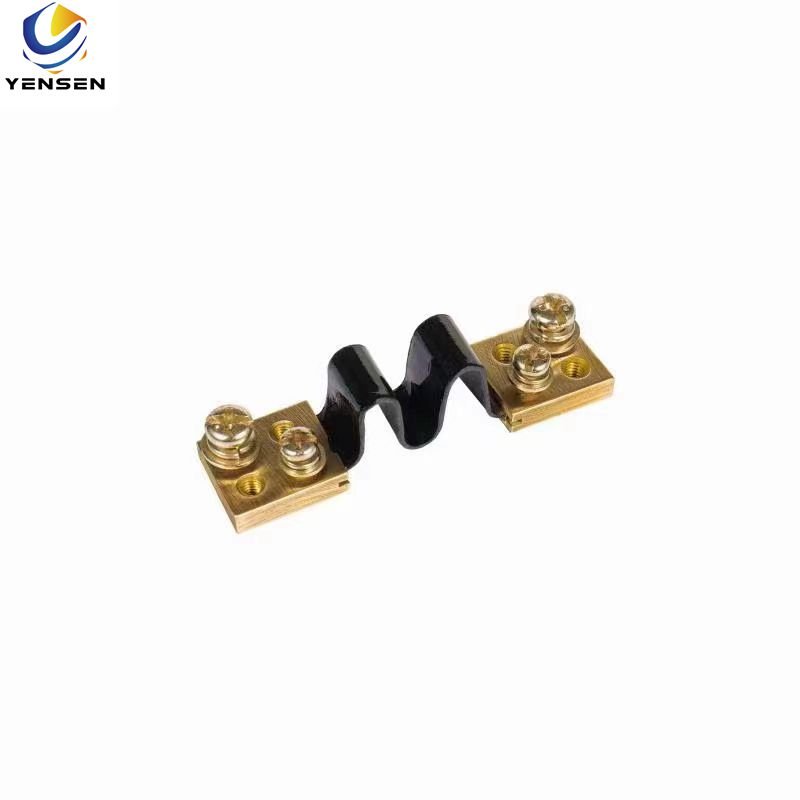
Ammeter Shunt Resistor | 75mV Precision DC Current Measurement
Technical Specs:
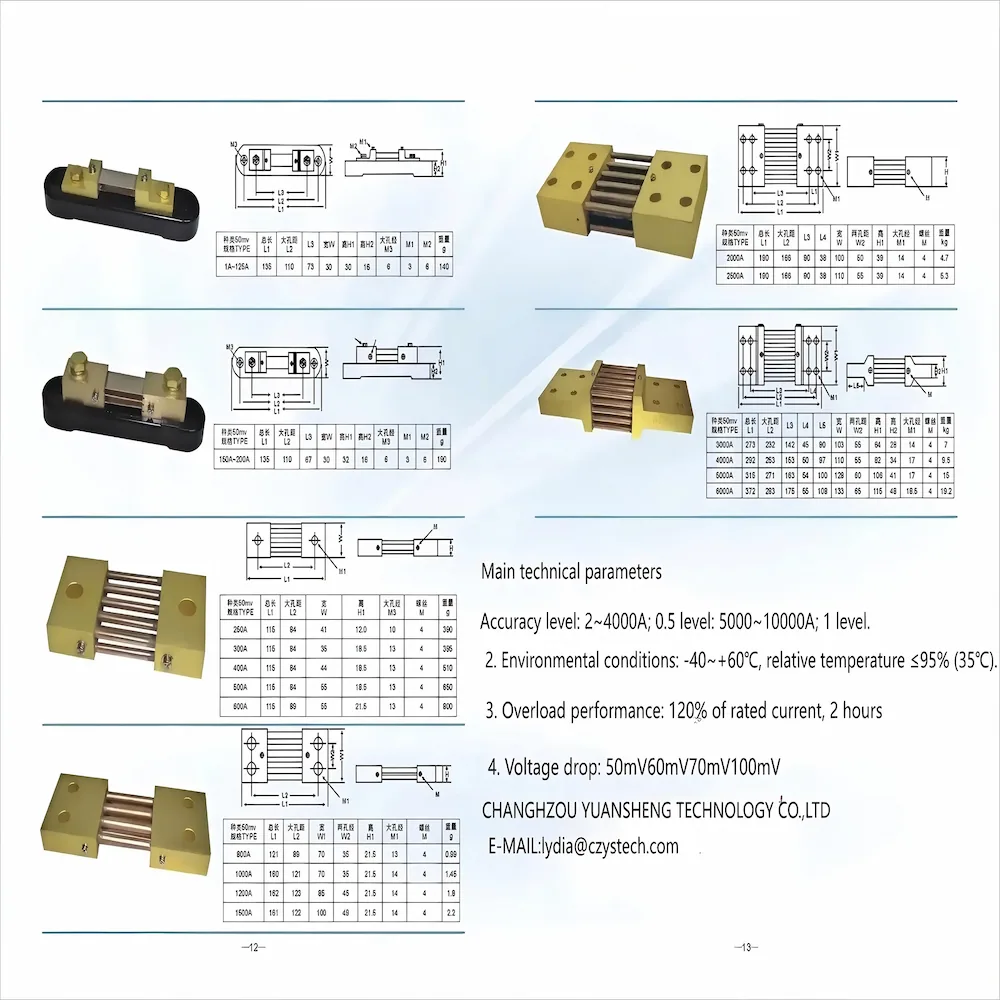
Accuracy: 0.5 level (2–4000A), 1.0 level (5000–10000A)
Temp range: -40°C to +60°C; RH ≤95% (at 35°C)
Overload: 120% rated current for 2 hrs
Voltage drop: 50mV, 60mV, 70mV, 75mV, 100mV
Heat: ≤80°C (<50A); ≤120°C (≥50A)
Description
Ammeter Shunt Resistor | 75mV Precision DC Current Measurement
The Ammeter Shunt Resistor is designed for accurate DC current measurement in applications such as battery monitoring systems, solar power equipment, energy storage systems, and industrial motor control.
With a 75mV voltage drop at 200A rated current, this precision shunt resistor provides a stable measurement signal for analog and digital ammeters, helping engineers achieve reliable current monitoring in high-current circuits.
Manufactured with low temperature coefficient manganin alloy and high-conductivity copper terminals, the shunt resistor maintains stable resistance performance under continuous load conditions. Its robust construction makes it suitable for demanding industrial environments where measurement accuracy and long-term stability are critical.
Custom current ratings, resistance values, and terminal configurations are available to meet different system requirements.
A lower sampling ratio (mA reading vs actual current in amps) results in better linearity and measurement accuracy.
For deeper insights into shunt resistor working principles, see this tutorial on All About Circuits.
Main Technical Specifications
| Parameter | Value |
|---|---|
| Accuracy Class | 2–4000A: 0.5 level; 5000–10000A: 1 level |
| Temperature Range | -40°C to +60°C |
| Relative Humidity | ≤95% at 35°C |
| Overload Capacity | 120% rated current for 2 hours |
| Voltage Drop Options | 50mV, 60mV, 70mV, 75mV, 100mV |
| Heat Generation | ≤50A: ≤80°C; >50A: ≤120°C |
-
Typical Applications
The 75mV Ammeter Shunt Resistor is commonly used in:
- Power supply systems
- Battery monitoring systems
- Energy storage equipment
- Solar power systems
- Industrial automation and control systems
- DC power measurement equipment
For more current sensing solutions, explore our Current Shunt Resistor products and DC Current Measurement Solutions.
How Does a 75mV Shunt Resistor Work?
A 75mV shunt resistor is a precision low-resistance component used to measure DC current by generating a small voltage drop across the resistor.
When current flows through the shunt resistor, the voltage drop can be measured by an ammeter or monitoring circuit. The current value is calculated according to Ohm’s Law:
V = I × R
For example:
- 100A × 0.75mΩ = 75mV
- 50A × 1.5mΩ = 75mV
A stable voltage output allows the measurement system to accurately monitor current in battery systems, power supplies, and industrial equipment.
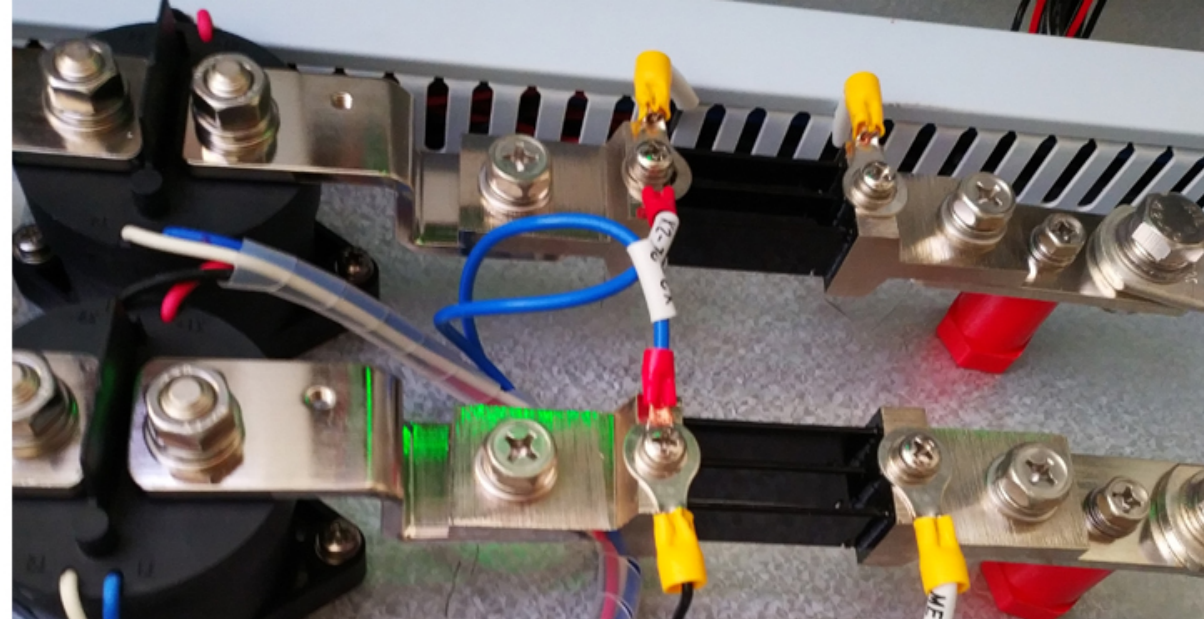
75mV Shunt Resistor Wiring Diagram
Correct wiring is important for achieving accurate current measurement.
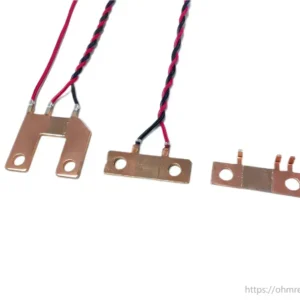
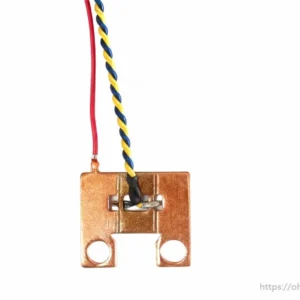
A 75mV shunt resistor typically uses separate current terminals and voltage sensing terminals. The sensing wires should be connected directly to the dedicated sense points to reduce the influence of contact resistance and improve measurement accuracy.
Recommended practices:
- Use dedicated voltage sense terminals
- Avoid measuring voltage across high-current connection points
- Keep sense wiring away from high-current paths when possible
A proper wiring design helps maintain accurate readings, especially in high-current applications.
Shunt wiring diagram

FAQ
What is an ammeter shunt resistor?
An ammeter shunt resistor is a low resistance component used to measure DC current by generating a small voltage drop. The voltage signal is measured by an ammeter to calculate the current value.
What does 75mV mean on a shunt resistor?
A 75mV shunt resistor produces a 75mV voltage output at its rated current. This standard signal is commonly used for accurate DC current measurement.
How do I select the right shunt resistor?
The selection depends on rated current, voltage drop, resistance value, accuracy requirement, TCR, and operating temperature. The shunt should be selected according to the measurement system requirements.
What is the difference between a 50mV and 75mV shunt resistor?
The difference is the volFAQtage output at rated current. A 75mV shunt provides a higher measurement signal, while a 50mV shunt has lower resistance and power loss.
Can you customize ammeter shunt resistors?
Yes. We provide customized shunt resistor solutions based on current rating, voltage drop, resistance value, dimensions, and terminal requirements.
Request a Quote for Ammeter Shunt Resistor
Need a customized shunt resistor for your application?
Please provide:
- Rated current
- Voltage drop requirement
- Resistance value
- Application details
- Mechanical dimensions (if available)
Our engineering team will review your requirements and recommend a suitable solution.