Shunt-Based DC Meter vs Hall Effect Meter: How to Choose the Right Current Measurement Method
Introduction
Shunt vs Hall Effect current measurement is a common design decision for engineers working on solar monitoring systems, EV charging equipment, battery management systems, and industrial power electronics. When designing DC power measurement systems, engineers often need to choose between shunt-based current measurement and Hall effect sensing technologies.
Both methods are widely used in applications such as solar monitoring systems, EV charging equipment, battery energy storage systems, and industrial power electronics. However, the best solution depends on factors including measurement accuracy, isolation requirements, system cost, temperature stability, and application conditions.
Understanding the differences between these two current measurement methods helps engineers select the right approach for reliable and efficient system design.
What Is a Shunt-Based Current Measurement Method?
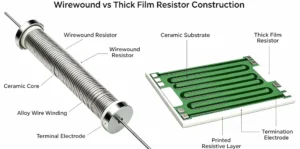
A shunt-based current measurement system uses a precision resistor with a very small resistance value connected in the current path. When current flows through the shunt resistor, a small voltage drop is generated according to Ohm’s law. This voltage signal is measured and converted into current information.
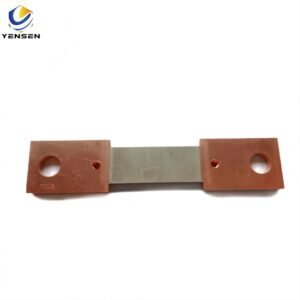
Precision shunt resistors are commonly manufactured using low temperature coefficient resistance alloys such as manganin and constantan to achieve stable measurement performance.
Advantages of Shunt-Based Current Measurement
High Measurement Accuracy
Shunt resistors provide direct current measurement through a precise voltage drop, making them suitable for applications requiring high accuracy and repeatability.
Excellent Temperature Stability
High-quality manganin and constantan materials offer low temperature drift, helping maintain measurement accuracy across different operating conditions.
Cost-Effective Design
Compared with Hall effect sensors, shunt-based solutions usually provide a simpler and more economical design, especially for high-volume applications.
Compact Integration
The small size and simple structure of shunt resistors make them suitable for smart meters, battery monitoring systems, and PCB-based power measurement designs.
What Is a Hall Effect Current Measurement Method?
Hall effect current sensors measure current by detecting the magnetic field generated around a conductor.
Unlike shunt resistors, Hall effect sensors provide electrical isolation between the measured current path and the measurement circuit, which can be beneficial in high-voltage applications.
Advantages of Hall Effect Sensors
Electrical Isolation
Hall effect sensors can measure current without directly inserting a resistance element into the power path, providing isolation between high-voltage circuits and control electronics.
Low Power Loss
Because there is no significant voltage drop across a sensing resistor, Hall effect solutions can minimize power loss in certain applications.
Suitable for High Current Applications
Hall effect sensors are commonly used in systems where isolation and high current measurement capability are primary requirements.
Shunt Resistor vs Hall Effect Sensor Comparison
| Factor | Shunt-Based Measurement | Hall Effect Measurement |
|---|---|---|
| Measurement Principle | Voltage drop across precision resistor | Magnetic field detection |
| Accuracy | Very high accuracy possible | Good accuracy, depends on sensor design |
| Temperature Stability | Excellent with manganin/constantan materials | Sensor drift may affect performance |
| Isolation | Requires isolation design | Provides electrical isolation |
| Power Loss | Small voltage drop exists | Minimal insertion loss |
| Cost | Generally lower cost | Usually higher cost |
| Response Speed | Excellent for fast current changes | Good response depending on sensor type |
| Size | Compact and easy to integrate | Larger sensor structure in many cases |
| Best Applications | Smart meters, battery monitoring, energy measurement | High voltage systems requiring isolation |
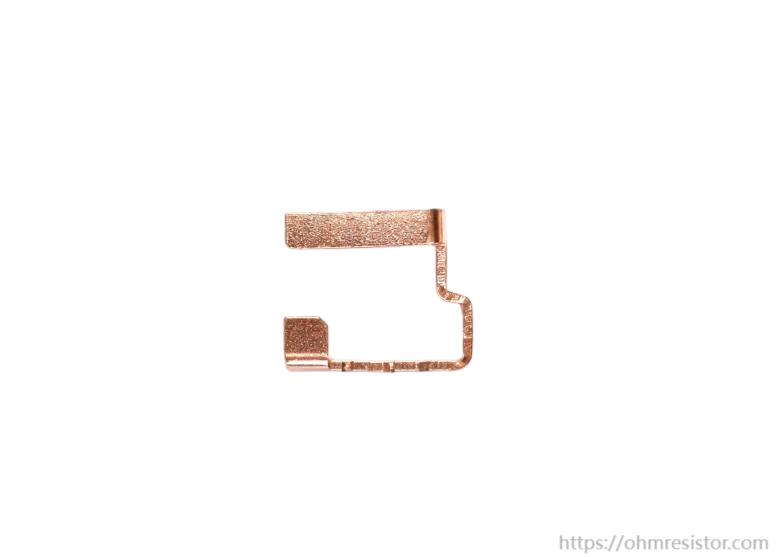
Choosing the Right Solution for Solar Monitoring Systems
Solar energy monitoring systems require accurate measurement of current generation, energy conversion efficiency, and system performance.
For applications where measurement accuracy and cost efficiency are important, shunt-based current measurement is often preferred.
Manganin shunt resistors provide stable resistance performance and low temperature drift, making them suitable for:
- Solar inverter monitoring
- DC energy meters
- Battery charge monitoring
- Power management systems
For high-voltage photovoltaic systems where isolation is critical, Hall effect sensors may be considered.
Choosing the Right Solution for EV Charging Systems
EV charging equipment requires reliable current monitoring for safety, charging efficiency, and power management.
The choice between shunt and Hall effect measurement depends on system architecture.
Shunt-based solutions are suitable for:
- DC charging monitoring
- Battery current measurement
- High-accuracy energy measurement
- Cost-sensitive charging equipment
Hall effect sensors are suitable for:
- Systems requiring galvanic isolation
- Higher voltage environments
- Applications where insertion loss must be minimized
Engineers should evaluate accuracy requirements, voltage levels, thermal conditions, and system cost before selecting the measurement method.
Why Many Energy Meter Designs Use Manganin Shunt Resistors
For precision current measurement applications, manganin and constantan shunt resistors remain a popular choice because they provide:
- Stable resistance values
- Low temperature coefficient
- Excellent long-term reliability
- Accurate current measurement performance
These characteristics make shunt resistors suitable for smart meters, battery management systems, industrial power monitoring, and renewable energy applications.
Learn more about our Constantan Manganin Shunt Resistor solutions for precision current measurement applications.
How to Select a Shunt Resistor for Your Application
When selecting a shunt resistor, engineers should consider:
- Rated current
- Resistance value
- Voltage drop (mV rating)
- Accuracy requirement
- Temperature coefficient (TCR)
- Mounting method
- Operating environment
A properly selected shunt resistor helps ensure reliable measurement performance and long-term system stability.
Conclusion
Both shunt-based current measurement and Hall effect sensing technologies have important roles in modern power electronics.
Hall effect sensors provide advantages when electrical isolation is required, while shunt resistors offer excellent accuracy, stability, and cost efficiency for many energy measurement applications.
For solar monitoring systems, EV charging equipment, battery systems, and industrial power electronics, selecting the right current measurement method depends on balancing accuracy, isolation, thermal performance, and system requirements.
By understanding the differences between these technologies, engineers can choose a current sensing solution that delivers reliable performance throughout the product lifecycle.
FAQ
Is a shunt resistor more accurate than a Hall effect sensor?
For many precision measurement applications, shunt resistors can provide higher accuracy and lower temperature drift, especially when using manganin or constantan resistance materials.
Are Hall effect sensors better for high voltage applications?
Hall effect sensors can be advantageous in high-voltage systems because they provide electrical isolation between the power circuit and measurement electronics.
Which current measurement method is better for battery monitoring?
Both technologies can be used. Shunt resistors are commonly selected when high accuracy and cost efficiency are priorities, while Hall effect sensors may be preferred when isolation is required.