Description
Product Overview
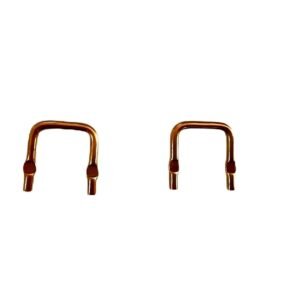
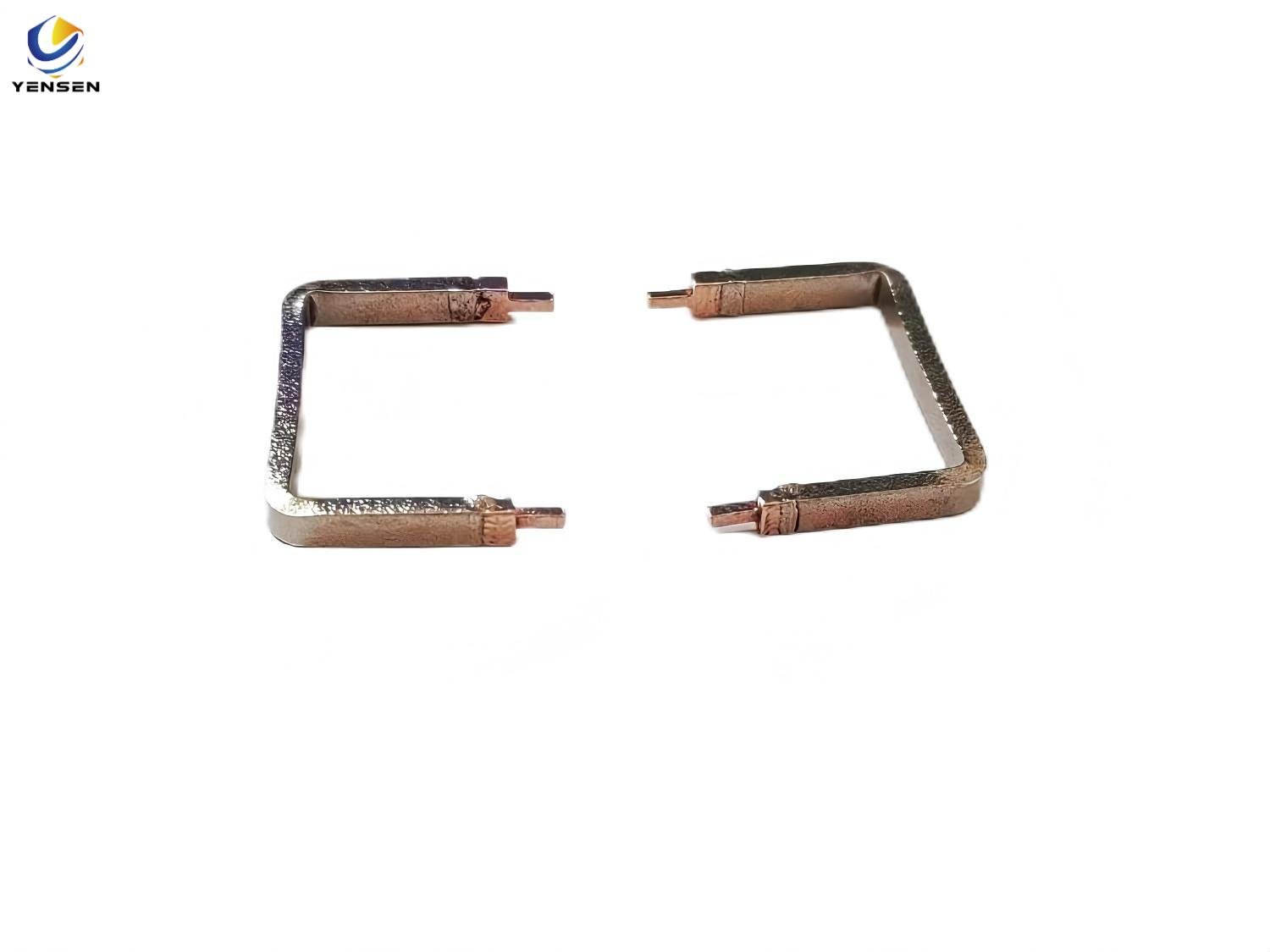
The U Type Metal Element Open-Air Low Ohm Resistor is engineered for precision current measurement and power control in demanding industrial applications. Its U-shaped metal element provides excellent mechanical strength, while the open-air design allows efficient natural convection for superior thermal performance. These resistors maintain stable resistance under high currents and repeated thermal cycles, making them ideal for PCB designs requiring accurate and reliable current sensing.
Key Features
U type metal element structure – enhanced mechanical strength and long-term reliability under high-current conditions.
Open-air design – maximizes natural convection, reducing thermal stress and improving component lifespan.
Low resistance range with stable TCR – 50μΩ–1mΩ, maintaining precision even under dynamic thermal loads.
High pulse and overload capability – capable of handling transient current spikes without degradation.
Reliable under continuous thermal cycling – maintains resistance stability through repeated heating and cooling.
Flexible mounting options – SMD, screw, or PCB weldable for diverse industrial and electronic applications.
Customizable – wire diameter, rated current, pin pitch, and resistance value can be tailored for specific designs.
Specification
| Parameter | Value |
|---|---|
| Resistance Range | 50μΩ – 1mΩ |
| Tolerance | ±1%, ±0.5% |
| Terminal | 2-terminal / 3-terminal (Kelvin) |
| Material | Manganin / Cu-Ni alloy |
| Current Rating | Up to 500A |
| Operating Temperature | -55°C to +170°C |
| Mounting | SMD / screw / PCB weldable |
Product Nominal
| Category | Code / Value | Description |
|---|---|---|
| Material | K | Constantan (Manganese copper wire, Cu-Ni alloy) |
| Pin Pitch | 10 | 1.0 mm |
| Resistance | 20 | 20 mΩ |
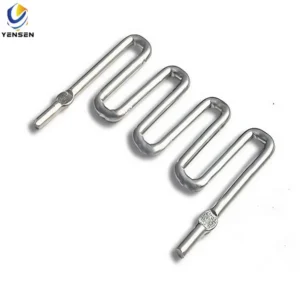
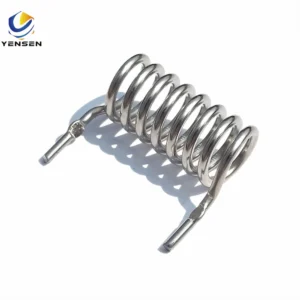
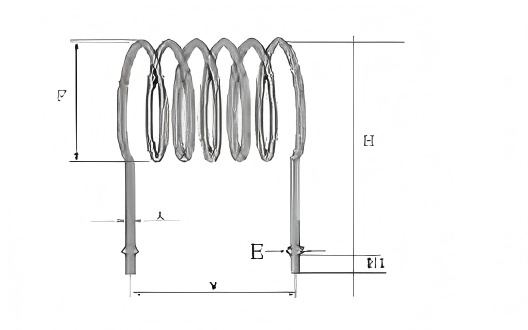
| Shape | U | U-type 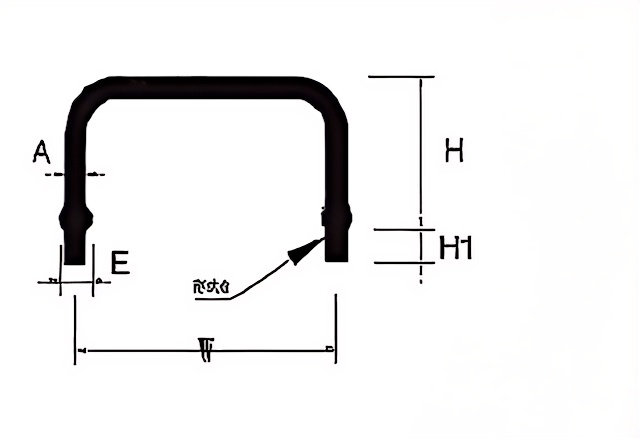 |
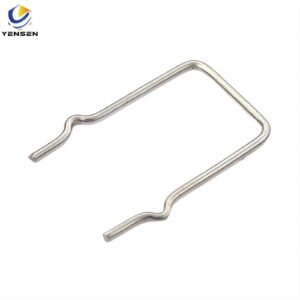
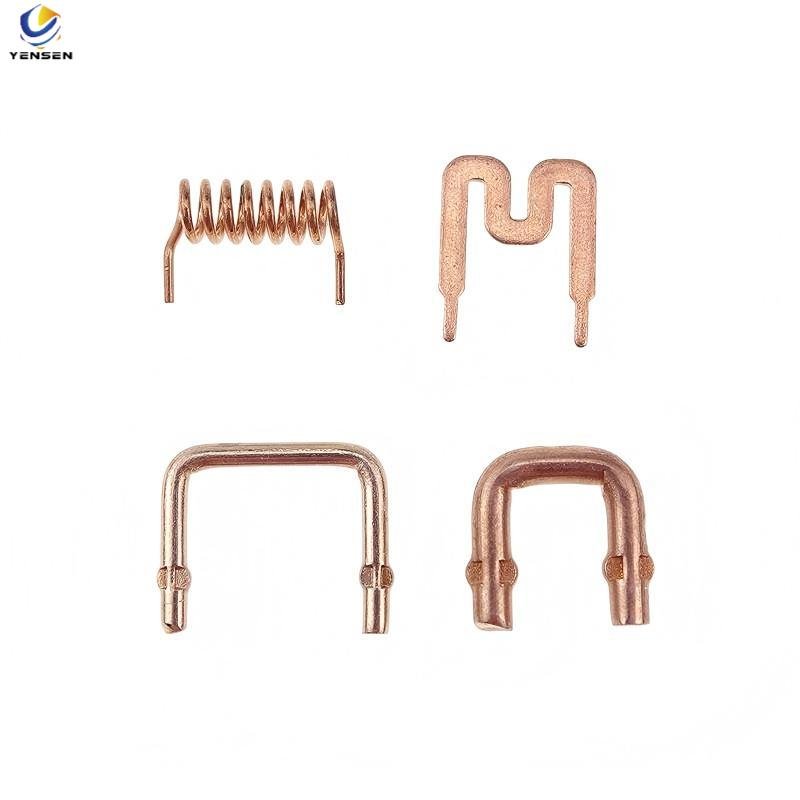
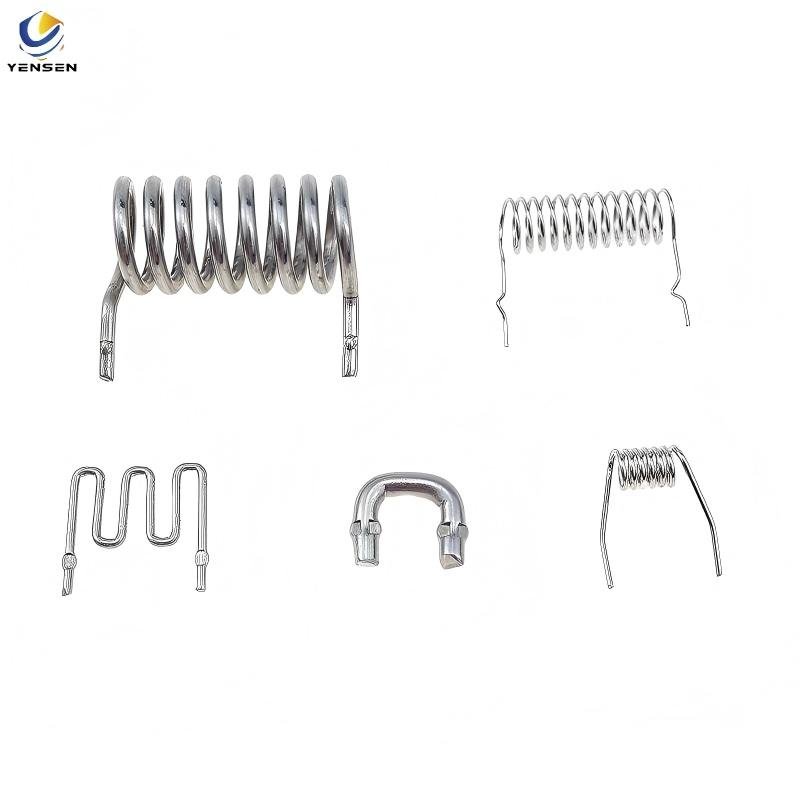
| Other Shapes | M, M2, LX, UZ, HX | M: M-type, LX: Spiral, UZ: Folding feet, HX: Custom |
| Ordering Notes |
| |
| Parameter Guide | A: Wire size meter, H: Height, H1: Pin length, E: Presser foot, W: Pin pitch | |
Product Shape
| Shape 1 | Shape 2 | Shape 3 |
|---|---|---|
| U Type
| UZ Type
| HX Type
|
| M Type
| M2 Type
| LX Type
|
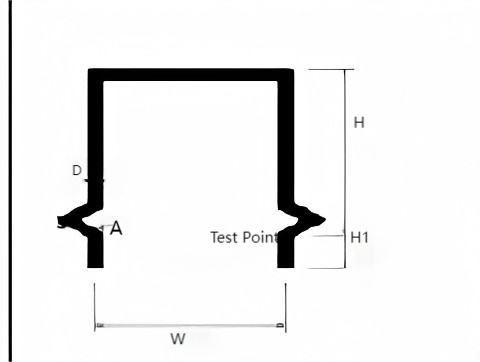
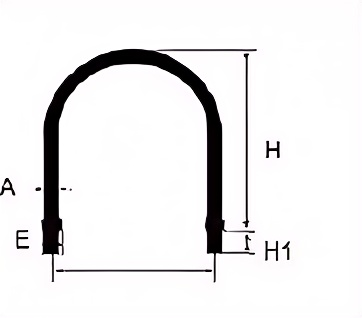
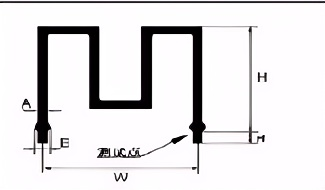
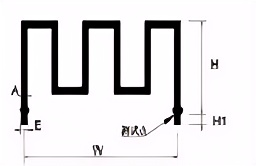
Test Conditions
| Test Conditions | Max Resistance Change (ΔR%) |
|---|---|
| 1000 hours at 25°C (Loading Life) | ≤ 1% |
| 100 hours in Moisture | ≤ 1% |
| 1000 Thermal Cycles (-40°C to +150°C) | ≤ 1% |
Why Choose U Type Open-Air Low Ohm Resistors?
Compared with enclosed or cement resistors, the open-air low ohm resistor offers superior cooling efficiency and faster thermal response.
The U type metal element structure further enhances reliability in high-current and high-temperature operating conditions.
Open-air low ohm resistors are designed based on fundamental resistor principles, including resistance calculation, thermal behavior, and power dissipation (see Electronics Tutorials for general electronics fundamentals).
Applications
DC-DC converter modules for telecom and industrial power systems, ensuring precise voltage and current control.
Power controllers and inverters in renewable energy systems and distributed power grids.
Industrial control circuits for accurate current sensing and power regulation.
Motor drives, fan controllers, HVAC power units in commercial and industrial installations.
Compact UPS modules and power distribution boards for critical power management.
These resistors are particularly suitable for scenarios requiring high-current handling, fast thermal response, and minimal signal distortion, such as advanced motor control, precision industrial electronics, and PCB current measurement designs.
Explore our full range of precision shunt resistors-M-Type Open Air Current Sense Shunt Resistor
PCB Design Guidance
Position resistor close to current path to minimize parasitic effects.
Ensure sufficient copper area for heat dissipation under high current.
Use non-inductive layout to maintain high-speed switching performance.
Combine with decoupling or filtering capacitors if used in noise-sensitive circuits.