Description
Overview
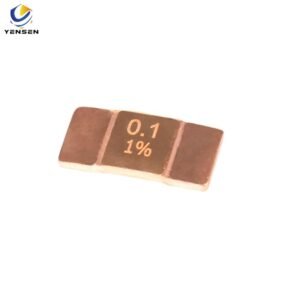
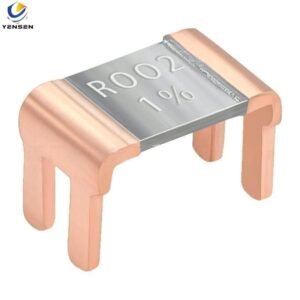
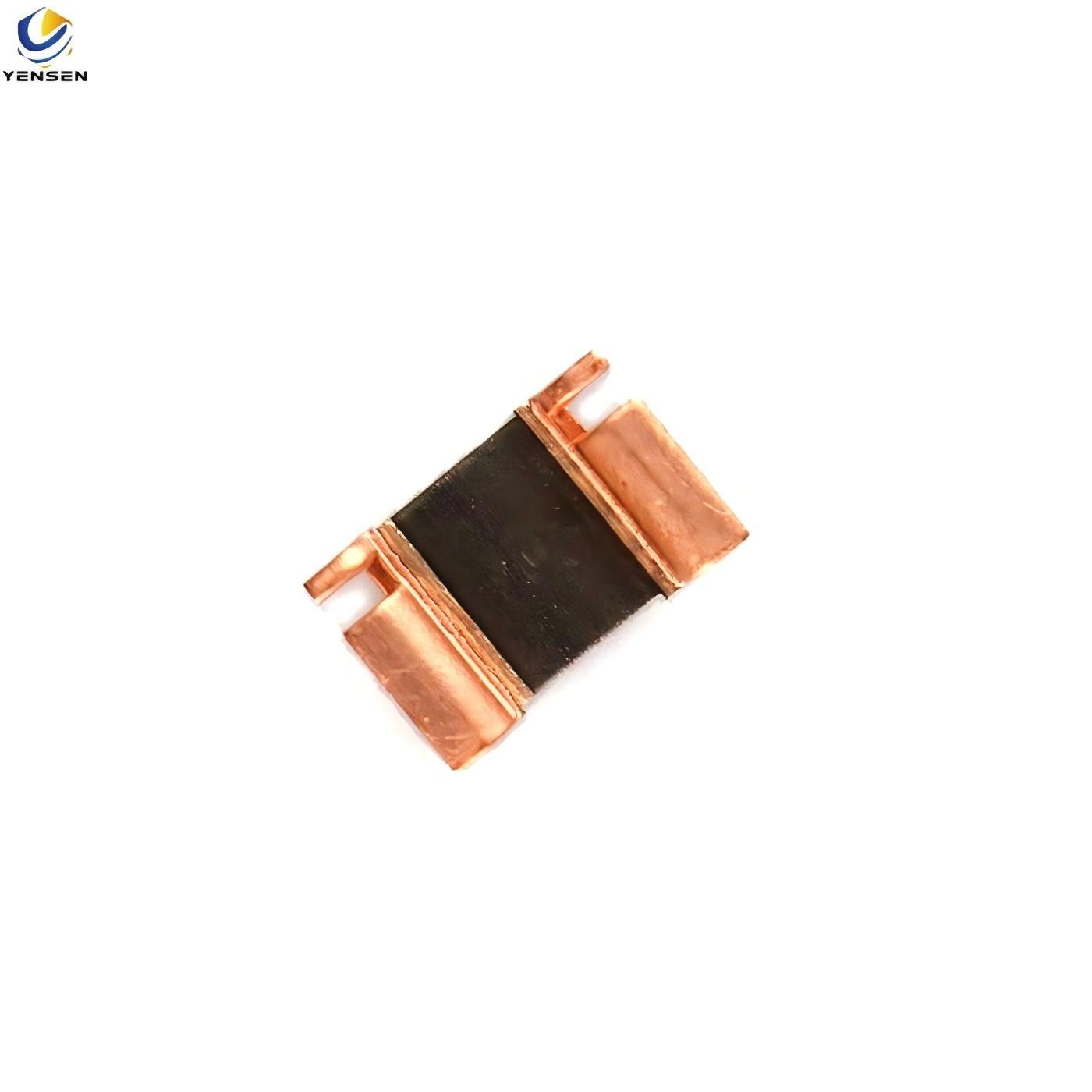
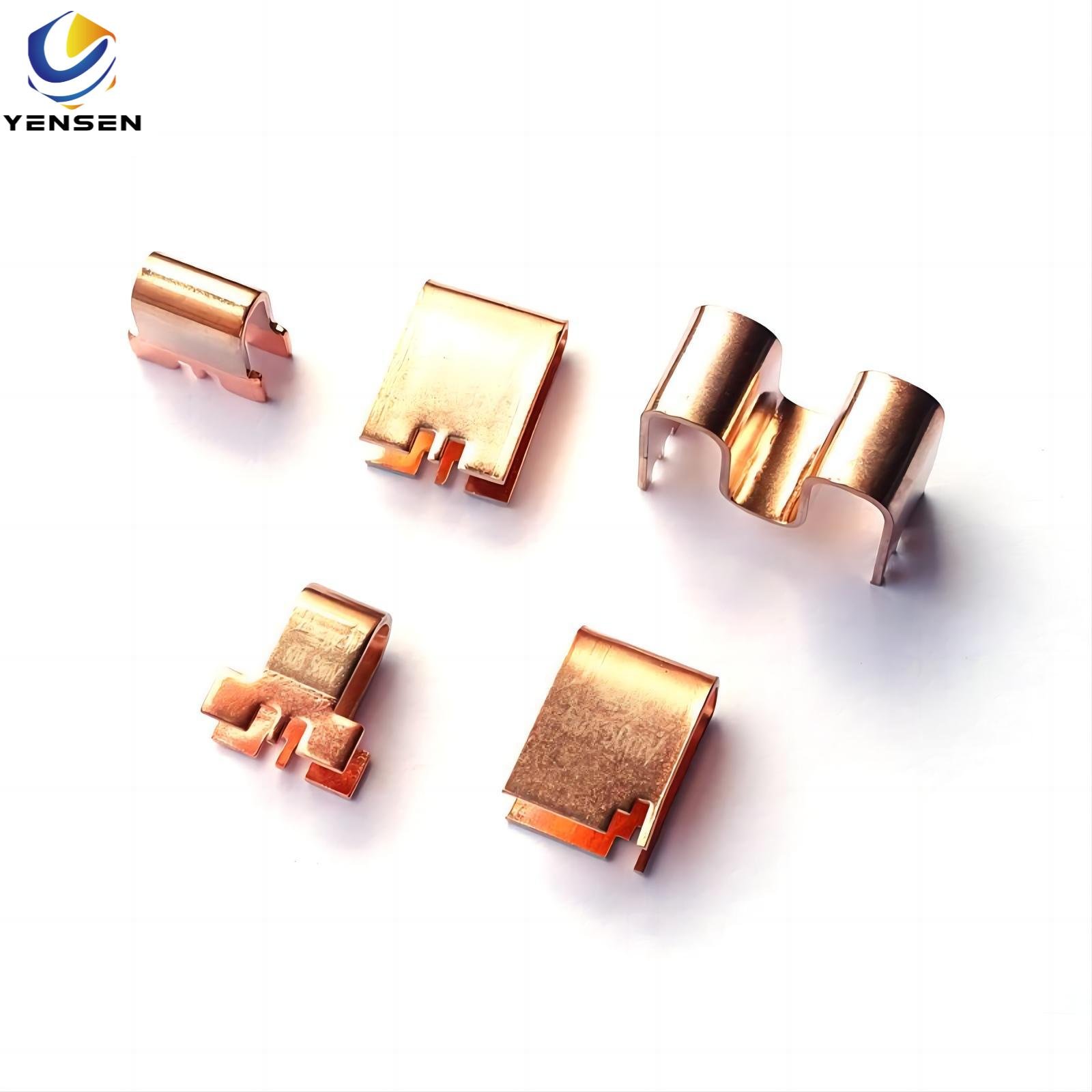
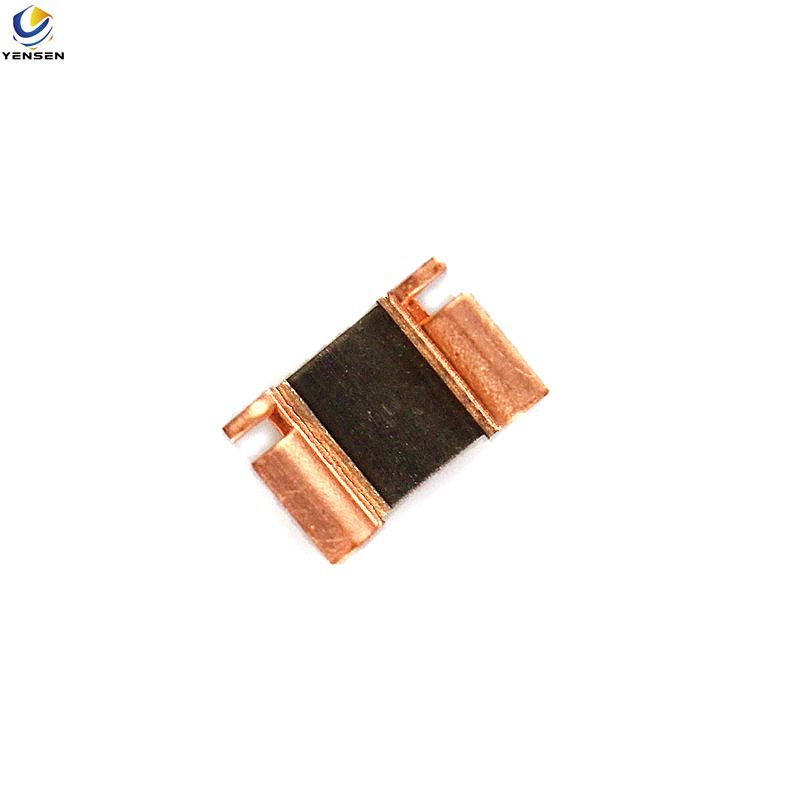
Kelvin Type SMT Current Sense Resistors are precision low resistance shunt resistors designed for accurate current measurement in PCB power electronics and industrial applications. Featuring a four-terminal Kelvin connection design, they minimize measurement errors caused by PCB trace resistance and contact resistance, providing reliable current sensing performance in high-current circuits.
With low TCR metal alloy construction and excellent thermal stability, these SMT shunt resistors deliver consistent performance for power modules, battery management systems, power supplies, motor control, and other applications requiring high-accuracy current monitoring.
Why Choose Kelvin Type SMT Current Sense Resistor?
Traditional two-terminal shunt resistors may introduce measurement errors caused by PCB traces and connection resistance. Kelvin four-terminal shunt resistors separate current paths and voltage sensing paths, providing more accurate measurements in low resistance applications.
Key Features of Kelvin Type SMT Current Sense Resistor
High Accuracy Current Measurement — Designed for precision current sensing with tolerance down to ±0.5%.
Kelvin Four-Terminal Design — Separate current and sensing terminals minimize errors caused by PCB traces and contact resistance.
Low Resistance Values — Supports ultra-low resistance measurement applications from mΩ level for accurate current monitoring.
Low TCR Performance — Stable resistance characteristics across temperature variations for reliable operation.
SMT PCB Mount Design — Compact surface mount structure enables easy integration into power modules and high-density PCB layouts.
Excellent Thermal Stability — Maintains reliable performance under high-current operating conditions.
RoHS Compliant — Suitable for automated PCB assembly and industrial electronic applications.
Dimensions of Kelvin Type SMT Current Sense Resistor
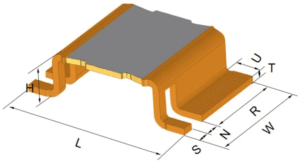
| Type | W (mm) | L (mm) | H (mm) | R (mm) | N (mm) | S (mm) | U (mm) | T (mm) |
|---|---|---|---|---|---|---|---|---|
| VB-0.2mR | 6.7±0.5 | 10.1±0.5 | 3.6±0.5 | 5.0±0.2 | 1±0.15 | 0.7±0.1 | 2.0±0.2 | 0.6±0.15 |
| VB-0.3mR | 6.7±0.5 | 10.1±0.5 | 3.6±0.5 | 5.0±0.2 | 1±0.15 | 0.7±0.1 | 2.0±0.2 | 0.6±0.15 |
| VB-0.5mR | 6.7±0.5 | 10.1±0.5 | 3.3±0.5 | 5.0±0.2 | 1±0.15 | 0.7±0.1 | 2.0±0.2 | 0.6±0.15 |
| VB-0.7mR | 6.7±0.5 | 10.1±0.5 | 3.0±0.5 | 5.0±0.2 | 1±0.15 | 0.7±0.1 | 2.0±0.2 | 0.4±0.15 |
| VB-1mR | 6.7±0.5 | 10.1±0.5 | 3.0±0.5 | 5.0±0.2 | 1±0.15 | 0.7±0.1 | 2.0±0.2 | 0.4±0.15 |
| VB-2mR | 6.7±0.5 | 10.1±0.5 | 3.0±0.5 | 5.0±0.2 | 1±0.15 | 0.7±0.1 | 2.0±0.2 | 0.4±0.15 |
| VB-3mR | 6.7±0.5 | 10.1±0.5 | 3.0±0.5 | 5.0±0.2 | 1±0.15 | 0.7±0.1 | 2.0±0.2 | 0.4±0.15 |
| VB-4mR | 6.7±0.5 | 10.1±0.5 | 3.0±0.5 | 5.0±0.2 | 1±0.15 | 0.7±0.1 | 2.0±0.2 | 0.4±0.15 |
For more information about current sensing technologies, please contact our engineering team.
Electrical Specifications
| Parameter | Value |
|---|---|
| Resistance Range | 0.2mΩ – 4mΩ |
| Tolerance | ±0.5%, ±1% |
| TCR | Low TCR available |
| Construction | 4 Terminal Kelvin Type |
| Application Current | High Current Sensing |
| Mounting Type | SMT PCB Mount |
Applications of Kelvin Type SMT Current Sense Resistor
Power module current monitoring
DC-DC converters and switching power supplies
Inverter and motor drive systems
Battery management systems (BMS)
Energy meters and smart power monitoring equipment
Industrial automation and control electronics
Looking for other current sensing solutions? Check out- our4026 Four-Terminal SMD Precision Chip Shunt Resistor (0.2–1mΩ Alloy)
FAQ
What is a Kelvin type shunt resistor?
A Kelvin type shunt resistor uses a four-terminal design to improve current measurement accuracy by separating current and sensing connections.
Why use Kelvin shunt resistors for low resistance measurement?
Kelvin shunt resistors reduce errors caused by PCB trace resistance and contact resistance, making them suitable for precision current sensing.
What applications use Kelvin Type SMT Current Sense Resistor?
They are commonly used in power modules, DC-DC converters, battery systems, motor drives, and industrial electronics.